Religious Extremism Over Peaceful Coexistence: JAMB and Its Watchdogs’ Overzealousness

By Kenny Ola
It is quite amazing why many Nigerians still remain hell-bent on fueling religious matters, not to breed peace but to deepen division. Religion, as sacred as it is, does not merely preach total submission to the Maker of man and the universe. It further strengthens the moral etiquette that humanity itself strongly places a premium on.
Consequently, in Nigeria, the very religion believed to engender undistorted peace and grim harmony has now been seriously weaponised to discharge national resentment. The illusion that religion can be used to put an end to national unrest has collapsed. This matter is not just unsettling; it paints sacred religions in a colour that threatens the very fabric of such religions. Nigerians, irrespective of our religious beliefs, should bear in mind that no matter how opposing we are against one another’s beliefs, no religious beliefs will share in the consequences of our constant rift; we forever remain the bearers of these consequences, not because it is unsafe to support one’s religious creed, but because the very cause of such national unrest is never justified by any religion.
The recent 2026 Unified Tertiary Matriculation Examination (UTME) is a quiet depiction of how religion is dishonestly employed by Nigerians to peddle suspicion and foster malicious rumours. It was reported that some Muslim students were denied entry into the examination halls, not because they went against the formal ethics highlighted by Joint Admissions and Matriculation Board (JAMB) but because they duly observed their religious rites by using their Hijabs (an Arabic equivalent of “veil”) despite the coordinated structure of probing the sincerity and integrity of each student with the intention of eroding examination malpractice.
The news of this event did not end at the accredited centres. It reached every corner of Nigeria, revealing how quick Nigerians are towards religious matters. Social media choked with religious comments can attest to the swiftness of Nigerians on matters relating to religion and bear witness to our hesitation to those national issues that demand swift response. Each comment sends more than a message; it reveals the true identity of the sender: their religion, their opinion and their feeling with regard to the event. Abuse is what every sacred religion does not permit but it is what many Nigerians weaponise when religious disputes arise. Public morals suddenly become loose when confronted with religious discourse. Comment sections unexpectedly become battle grounds for religious war, an intense moment when words, wielded without a second thought, become individual weapons.
What makes this issue even more troubling is how some Nigerians support the dehumanisation of these Muslim students. When religion is handled with extremity and humanity is considered archaic, brutality becomes normality and human conscience thrives not on compassion but on compulsion. Even our God, to whom every sacred religion belongs, frowns upon brutality and dehumanisation, not to speak of His religions. It is oftentimes said that Nigerian constitution frowns upon abuse yet under the cover of religion, abuse has gained wide currency. We all live in a country where our constitutional rights have been weakened by the political power of religion. Enmity quietly grows under the deep influence of religious cleavages. The current situation in Nigeria now demands that countless innocent students suffer the consequences of the religion they inevitably practise by birth. A constitution that constantly overlooks the slightest violation robed in religious attire should get ready for a religious war that will render its country not just restless but in perpetual restlessness.
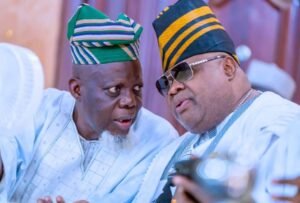
In Nigeria, religion is not just sacred; it is political, a quiet tool for social unrest, steeped in deeper suspicion and employed by religious predators who truly understand the mental and emotional weakness of many Nigerians. The JAMB Registrar, Professor Ishaq Olarenwaju Oloyede, with honest approach, reacted to this event by reaffirming that Joint Admissions and Matriculation Board (JAMB) respects the belief systems of every Nigerian. Professor Oloyede openly stated his displeasure and declared such security measures as being overzealous, a mere act to disrupt national peace and ignite a religious war which, in consequence, will leave the whole country in endless devastation.
Brutality must be ended. Dehumanisation has to be led to a halt. Constitution should not be silent about matters that require immediate urgency. A country defined by unrest cannot build prosperity. A people constantly swayed by religious shenanigans barely sustain relevance.
It is widely believed that peace is what every sacred religion preaches. Therefore, any religion that threatens the existence of peace is not a religion. It is an institution, shaped by self-interest and governed by predators who derive immense pleasure from national uproar. In sum, this piece is not written to cast any religion in good or bad light. It is written with a sole purpose of restoring peace in a country shattered by religious dubiousness.
Kenny Ola is a communications specialist based in Lagos. He can be reached via Kennyola958@gmail.com