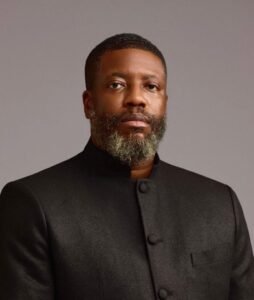
Prof. Ukonu Warns Journalists: Use AI Responsibly, Protect Ethics and Identity

At a capacity-building retreat of the State House Press Corps in Enugu, Professor Michael Ukonu, Head of the Department of Mass Communication at the University of Nigeria, Nsukka, delivered a powerful keynote on the future of journalism in the age of artificial intelligence (AI).
His address, titled “Journalism in the Age of AI: Ethical Boundaries, National Development, and the Fight for Professional Identity,” examined how AI is transforming journalism and the ethical dilemmas it poses.
“Standing on the already established protocol, I begin by congratulating everyone present for organizing this timely and important event,” Ukonu said. He acknowledged the efforts of the State House Press Corps and expressed appreciation for earlier speakers, particularly one who referenced “Mama J,” a remark he found insightful and reflective of “both expectation and a track of fear concerning journalism’s future in the AI era.”
Professor Ukonu described AI as more than just a technological upgrade, noting that “just a decade ago, we were talking about electronic reporting as the new frontier. Today, AI is the force reshaping our field at breakneck speed.”
Highlighting historical shifts in media— from print to radio, to television, and now AI—he argued that journalism is currently facing a triple crisis: a loss of authority, dwindling credibility, and a contested sense of function. “Journalists were once the unquestioned gatekeepers of verified information,” he said. “Now, anyone can publish content, and the public struggles to differentiate reliable sources from falsehoods.”
He emphasized that AI is fundamentally different from previous innovations because it automates not just production but also the entire news process, from gathering to dissemination. “AI challenges the distinction between human reporting and machine-generated content. It introduces ethical complexities unseen in previous technologies.”
Citing real-world examples, Ukonu referenced the New York Times lawsuit against OpenAI and Microsoft for allegedly using its content without consent, the Hollywood writers’ strike over AI-generated scripts, and a bizarre case from Polish radio where an AI bot scheduled an interview with a man who had been dead since 2012. “Unchecked automation can damage credibility and public trust,” he warned.
Ukonu argued that ethical journalism must remain rooted in human judgment: “Ethics is simply about obligations within a context—knowing what is acceptable and what is not. AI cannot replace human judgment on what is fair or truthful.”
Based on his research across Nigerian regions, he revealed that while many journalists are aware of AI, they lack a deep understanding or the ability to use it ethically. “Journalists may know about AI tools like ChatGPT or automation bots, but many lack the skills to apply them effectively.”
In conclusion, Professor Ukonu urged journalists not to fear AI but to master it as a tool for responsible reporting. “We must clearly define our role in society, uphold our ethical standards, and use AI to augment—not replace—our work. Journalism must remain the conscience of society—holding power accountable, telling authentic stories, and informing the public with integrity.”
He concluded, “AI is here to stay. But journalism must protect its soul.”