OPINION: NAHCON Chairman, Manufactured Support and the Amit Kalantri Paradox
By Suleiman Bashar Aliyu
It is both baffling and unfortunate that a group of inexperienced media hustlers has turned the crisis at the National Hajj Commission of Nigeria (NAHCON) into a commercial venture, successfully misleading the chairman into believing that Nigerians are overwhelmingly on his side against his own board members who petitioned the President over alleged financial and administrative misconduct.
Let it be clearly stated: this intervention is not a defense of the NAHCON board members. In truth, if the allegations are eventually subjected to full investigation, it is unlikely that every board member will emerge completely blameless. Institutional failures rarely rest on one individual alone. However, that reality does not excuse poor leadership or justify the clumsy attempt to drown serious allegations in sponsored media noise.
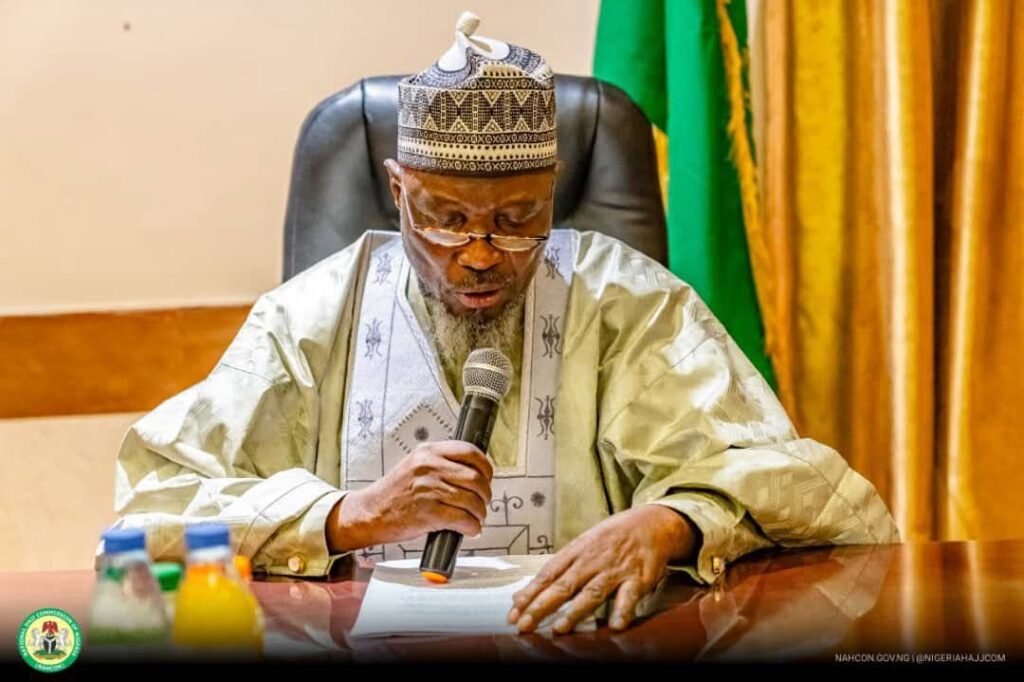
What is particularly troubling is that Professor Abdullahi Saleh Usman appears to have surrendered himself to opportunists chasing quick relevance and financial gain individuals who have converted a governance crisis into a branding exercise. This is a matter that demands maturity, restraint, administrative discipline, and discreet high-level engagement, not loud press statements and amateur propaganda.
Even more dangerous is the attempt to drag Jama’atu Izalatil Bid’ah wa Iqamatus Sunnah (JIBWIS), a respected Izala movement into this controversy. JIBWIS is not a public relations agency for embattled office holders. It is a platform for Islamic reform and da’awah, not a shield for allegations of gross misconduct.
This forced narrative collapses under its own weight. Is Sheikh Muhammad Bin Uthman, a signatory to the petition and commissioner representing the North West, not a member of JIBWIS? Is Professor Mahfouz A. Adedimeji, representative of the Nigerian Supreme Council for Islamic Affairs (NSCIA) and also a signatory, not part of the same broad Islamic leadership ecosystem? These facts alone expose the dishonesty in presenting JIBWIS as an institution rallying behind the chairman.
History teaches us that popular or ethnic support has never been proof of innocence.
When James Ibori, former governor of Delta State, was convicted and jailed in the United Kingdom for money laundering, his people protested openly in his defence. Upon his return to Nigeria, he was received with celebrations rather than shame.
When Diepreye Alamieyeseigha, former governor of Bayelsa State, was arrested abroad and later convicted for corruption, mass protests erupted in his home state, portraying him as a victim of political persecution.
When Orji Uzor Kalu was convicted before his case was later overturned on technical grounds, supporters framed him as a hero unfairly targeted.
When Yahaya Bello, former governor of Kogi State, was accused of massive financial impropriety, his supporters flooded social media and public spaces to defend him, dismissing institutions and evidence alike.
These examples are neither endorsements nor condemnations—they are reminders that tribal, religious, or emotional loyalty has always existed independently of truth. Support does not invalidate allegations, just as accusations do not equal guilt.
What makes the NAHCON case tragic is not merely the allegations but the poor crisis management. Rather than focusing on rebuilding trust, engaging stakeholders, and addressing the substance of the petition with facts and documentation, the chairman’s camp chose spectacle over substance.
Many observers believe these media consultants understand what they perceive as the chairman’s intellectual and strategic limitations, and are exploiting him—knowing full well that once he exits office, they will quickly realign themselves with whoever occupies the seat next. This is not loyalty; it is opportunism.
The situation calls to mind the words of Amit Kalantri, who observed:
“The most dangerous irony is, people are angry with others because of their own incompetence.”
Incompetence, especially at the helm of a sensitive institution like NAHCON, is costly. It affects diplomacy with Saudi authorities, coordination with states, confidence among pilgrims, and ultimately, the success of the Hajj itself.
Hatred for incompetence does not require a desire to rule or dominate others. Sometimes, it simply reflects a belief in doing one’s work properly, accepting scrutiny, and being willing to be “torn to pieces” by facts if necessary.
At this critical stage of 2026 Hajj preparations, Nigeria can not afford noise, manipulation, or institutional ego. What is required is investigation, transparency, and accountability, not rented applause.
Truth does not need consultants.
Integrity does not need propaganda.
Institutions survive only when leaders understand this difference.
Suleiman Bashar Aliyu, public affairs commentators wrote from Kebbi State