Osun Muslim Community congratulates Adeleke, urges inclusive governance after re-election
By Olalere Adeleke
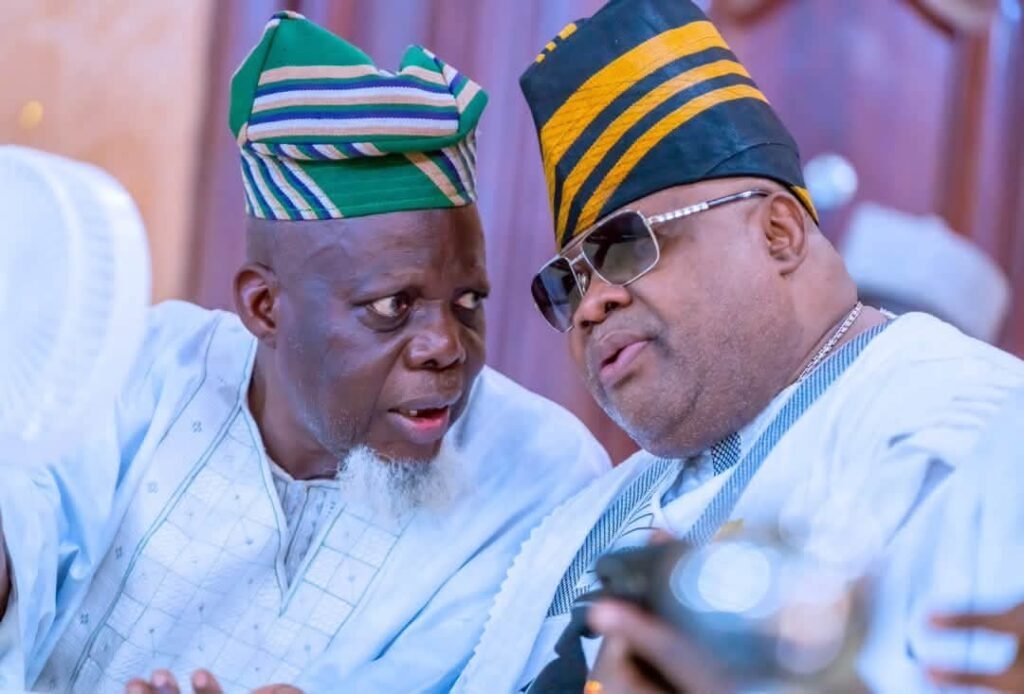
The Osun State Muslim Community has congratulated Governor Ademola Adeleke on his re-election, calling on political leaders, opposition parties, religious communities and residents to move beyond electoral divisions and focus on peace, accountable governance and the development of the state.
The Independent National Electoral Commission declared Adeleke, the candidate of the Accord Party, winner of Saturday’s governorship election after he polled 511,067 votes, defeating his closest challenger, Munirudeen Bola Oyebamiji of the All Progressives Congress, who received 444,815 votes. Adeleke won 19 of Osun’s 30 local government areas, while Oyebamiji won 11, giving the incumbent a victory margin of 66,252 votes.
In a statement issued Sunday, August 16, the President of the Osun State Muslim Community, Alhaji Mustafa Adeleke Olawuyi, said the conclusion of the election should mark the beginning of a broader responsibility to rebuild political relationships and concentrate attention on the needs of residents.
Olawuyi congratulated Adeleke while also commending political parties, electoral officials, security personnel and voters for their roles in the exercise.
He said the governor’s renewed mandate should be treated not simply as a political victory but as an obligation to govern residents fairly, including those who voted for other candidates.
“Today marks not merely the conclusion of an election, but the beginning of a new chapter of collective responsibility,” Olawuyi said.
He urged opposition parties, candidates and their supporters to pursue legitimate concerns through lawful and peaceful channels while remaining engaged in the development of the state.
‘Govern With Magnanimity’
Turning directly to Adeleke, the Muslim leader urged the governor to use his second term to reduce political divisions rather than deepen them.
Olawuyi called on the governor to extend what he described as “genuine olive branches” to political opponents and ensure that access to government programmes and development projects is not determined by how communities voted.
The challenge facing the administration, he said, stretches beyond electoral victory to critical issues affecting everyday life, including infrastructure, education, healthcare and economic opportunity.
“We urge Your Excellency to lead with the magnanimity befitting your office and to extend genuine olive branches to political opponents who contested in good faith,” Olawuyi said.
He added that development should be pursued “with fairness and equity across all communities and constituencies,” so that no resident feels excluded because of political preference.
Adeleke’s re-election gives his administration another term to translate campaign commitments into measurable outcomes. Beyond the celebration of victory, the test will increasingly shift to whether residents experience improvements in public services, economic opportunities, infrastructure and government accountability.
Muslim Community Pledges Bridge-Building Role
The Osun State Muslim Community also pledged to position itself as a bridge between government and citizens while promoting interfaith relations and peaceful political engagement.
Olawuyi said the organisation would use its grassroots networks to discourage incitement and violence and advocate for justice, transparency and good governance.
He extended the appeal beyond the Muslim population, calling on Christians, practitioners of traditional religions and residents of other beliefs to see the post-election period as an opportunity for shared civic responsibility.
According to him, citizens should simultaneously support initiatives that advance the public good and hold the government accountable for its commitments.
“Political participation does not end at the voting booth; it continues through vigilant citizenship and constructive engagement with those in power,” he said.
That distinction is particularly important after a closely contested election: reconciliation does not require opposition voices to abandon scrutiny, nor should support for development mean suspending demands for accountability. A healthier post-election environment allows political competitors to disagree while recognising shared interests in security, jobs, education, healthcare and functioning public institutions.
Olawuyi Calls for Interfaith Cooperation
Olawuyi also urged the Adeleke administration to strengthen engagement with faith-based organisations while protecting the fundamental rights of residents irrespective of religion or political affiliation.
He said Islamic principles of justice should guide the Muslim community’s approach to the post-election period, citing Qur’an 4:135, which calls on believers to remain steadfast in justice even when doing so may be against their own interests or those of relatives.
The significance of that principle, particularly after elections, lies in applying standards of accountability consistently, to political allies and opponents alike.
The Muslim community said it was prepared to support initiatives that improve residents’ lives without discrimination, while maintaining its responsibility to speak on justice, transparency and social harmony.
From Electoral Victory to Public Responsibility
While celebrations have followed Adeleke’s declaration as winner, the next phase presents a different measure of political success.
The governor must now govern a state in which hundreds of thousands of residents supported his principal opponent. Winning an election confers constitutional authority, but building durable public confidence requires reaching beyond the coalition that delivered victory.
For opposition parties, the post-election responsibility is equally consequential: to scrutinise government, present credible alternatives and pursue any electoral grievances through lawful institutions rather than allow partisan competition to undermine social cohesion.
Olawuyi said Osun’s political actors should embrace the principle that democratic competition does not have to produce permanent enemies.
“Our diversity of political views reflects our maturity as a people; let us channel this diversity toward constructive dialogue rather than destructive division,” he said.
The Muslim leader concluded by praying for Adeleke to exercise his renewed mandate with wisdom and justice and for Osun State to experience greater peace, development and prosperity.
For the Osun State Muslim Community, the central message after the ballot is that the election has ended, but democratic responsibility has not.
“The true work of democracy, governing justly, serving faithfully and building prosperity together, now begins in earnest,” the statement said.