Editorial | NSCIA’s new leadership must turn representation into a national force for peace
By Mutiu Olawuyi
Institutions are judged less by the offices they create than by the problems those offices help solve. That is the test facing the Nigerian Supreme Council for Islamic Affairs as its newly approved leadership team takes up its work.
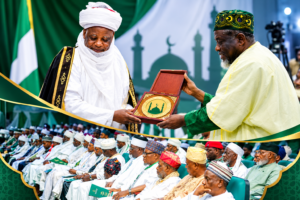
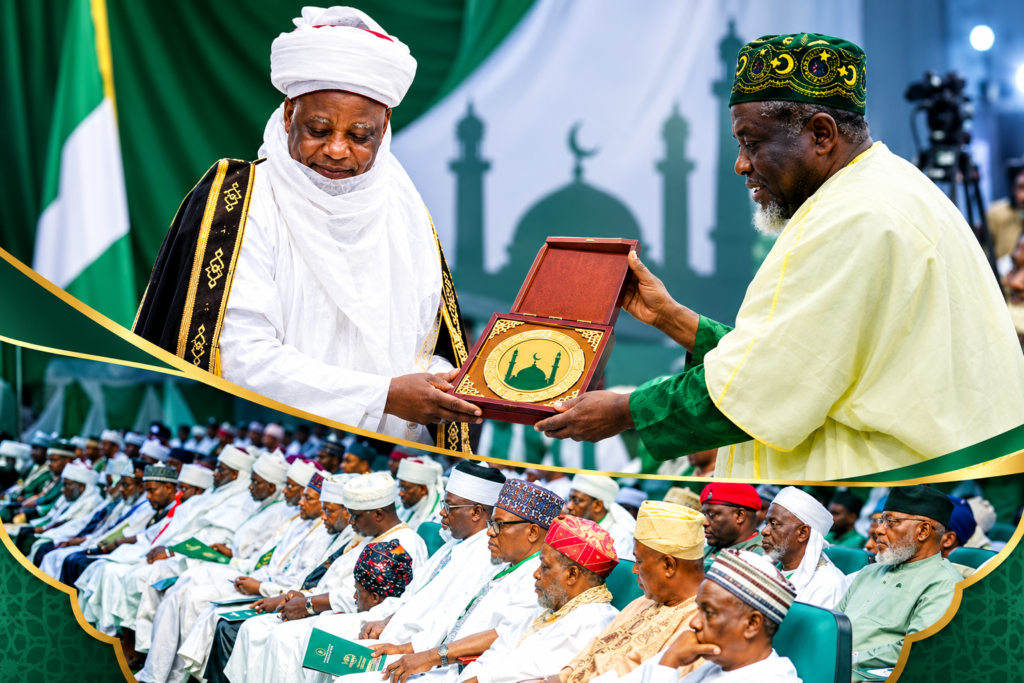
Founded in 1973, the NSCIA is the recognised apex body coordinating Islamic affairs in Nigeria. It has been led by the Sultan of Sokoto, Alhaji Muhammad Sa’ad Abubakar III, since 2006. The new team was approved at a rare moment of consultation. On October 1, Nigeria’s 66th Independence Day, the Sultan presided over the Council’s General Assembly at the National Mosque in Abuja, its first in seven years, where the appointments were formally approved. The Sultan explained that the gap followed certain challenges, and that expanded General Purpose Committee meetings had dealt with outstanding issues in the interval. Then he made a commitment that may matter more than any single appointment: the Assembly, he assured members, will now meet every year.
The Assembly is the Council’s highest decision-making organ, and this one brought together emirs, traditional rulers, imams and scholars representing the 36 states and the Federal Capital Territory, among them the Emir of Bauchi and the Etsu Nupe. The Sultan urged unity, the protection of religious freedom and the welcome of those who embrace Islam without compulsion. He thanked those who joined the previous day’s special prayers for peace, security and stability, and he invited delegates to offer constructive suggestions. A body that has reconvened its widest assembly, approved a broader executive there and promised to meet yearly has an opening to define what it does with its influence.
More than a larger structure
Muslim communities live in all 36 states and the Federal Capital Territory, across differences of language, culture, income, schooling and local challenge. A farmer in Zamfara does not necessarily experience Nigeria as an entrepreneur in Lagos does. A student in Ilorin may face barriers that a young person in Maiduguri does not. A national institution must therefore listen locally while thinking nationally.
Dedicated portfolios can help. They can move the Council from responding to events as they arise toward sustained programmes, policy positions and partnerships. But structure alone will not deliver that shift.
Each portfolio needs measurable responsibilities, open channels for consultation and a public way of reporting results.
The Sultan’s pledge of an annual Assembly offers a ready venue for that reporting. A yearly meeting that draws representatives from every state is also a yearly deadline. Each portfolio can be asked to say what it heard, what it did and what remains undone.
A team built for specialisation, and for coordination
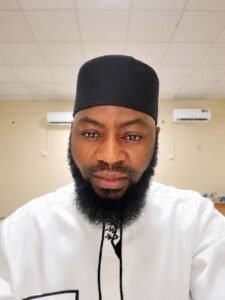
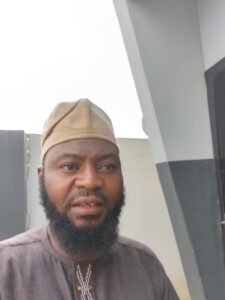
The slate the Assembly approved gives each function a clear owner. Professor Salisu Shehu, a Deputy Secretary-General of the Council, takes International Affairs, where Nigerian Muslim voices must be heard abroad in ways that reflect priorities at home. Mallam Abeny Mohammed, SAN, takes Corporate Matters, where legal and governance discipline underwrites institutional credibility. Dr Bala Muhammad takes Administration, the portfolio that decides whether good intentions become working programmes.
Dr. Umar Jibrilu Gwandu, as Public Relations Officer, and Hajia Sekinat Lawal, as Deputy, carry a task that is easy to underrate. A modern religious institution needs more than statements issued after major events. It needs communication that explains what the Council is doing, why it matters and what has been achieved, and that counters misinformation responsibly.
Specialisation must not harden into silos. The strength of this team will be measured by how well these offices work as one.
National Affairs: the portfolio that connects the rest
Professor Mahfouz Adedimeji’s appointment as Deputy Secretary-General for National Affairs deserves particular attention, because this is the portfolio whose brief is the country as a whole. He is a professor of pragmatics and applied English linguistics at the University of Ilorin, a Fulbright scholar and UNDP consultant, and a former director of the university’s Centre for Peace and Strategic Studies. Adedimeji is currently Vice-Chancellor of the African School of Economics in Abuja. He was also the pioneer Vice-Chancellor of Ahman Pategi University in Kwara State. In addition, he also currently serves as a member of the board of the National Hajj Commission of Nigeria. He is also no stranger to the Council as he was once served as the Admin Secretary, and some other key leadership capacities especially in the area of media, interfaith, etcetera. More so, exactly a decade ago, he delivered NSCIA’s lecture for the 56th Independence anniversary, titled “The Nation on Trial: Faith to the Rescue,” as listed on the NSCIA website.
That mix of academic, administrative and peace-related experience matters because national affairs cannot sensibly be reduced to Muslim affairs alone. Poverty does not ask whether a household is Muslim or Christian. Insecurity does not check a denomination. Youth unemployment, weak schools, poor healthcare and economic exclusion are national problems. A Muslim institution that wants to contribute to Nigeria must articulate the legitimate interests of Muslims while understanding the common interests of Nigerians.
The office could become a systematic listening channel. What are students saying about education? What are young Muslims saying about work and enterprise? What are women saying about opportunity, health and representation? What are farmers saying about land and insecurity? What are communities recovering from violence saying about reconstruction and reconciliation? Gathering those voices, finding common ground and turning it into constructive engagement with governments and other stakeholders would give the appointment substance beyond ceremony. The Assembly’s reach, with emirs, imams and scholars drawn from every state, gives the office a network to start from.
The test is practical. Can the portfolio build a credible record of community concerns, organise structured engagement in every state, strengthen youth and education initiatives, and help the Council engage government constructively while keeping its independence? The Sultan has stated that the NSCIA is not involved in politics ahead of the 2027 elections. A National Affairs office that earns trust across communities will help make that principle visible in practice.
Peace before the crisis
Nigeria does not need religious institutions that preach tolerance only after violence has occurred. It needs institutions that invest in relationships beforehand. The Council already has a platform for that work in the Nigeria Inter-Religious Council, formed in 1999 with 50 members, equally drawn from Muslim and Christian leadership and co-chaired by the Sultan and the president of the Christian Association of Nigeria, Archbishop Daniel Okoh. The NSCIA’s Secretary-General, Professor Is-haq Oloyede, served as NIREC’s national coordinator and executive secretary from 2007, which means the Council carries real institutional memory in this field.
The language coming out of NIREC this year is encouraging. At its 2026 meetings, leaders spoke of religious literacy and of the duty not to inflame tensions before the 2027 elections. The Sultan has insisted that insecurity must not be framed along religious lines: of those who kill and kidnap, he said, “They are criminals, not Muslim terrorists or Christian terrorists.” The task now is to carry that clarity beyond the meeting room.
The same message ran through the General Assembly. The Sultan stressed unity and religious freedom without compulsion, and the Council had prayed the day before for peace, security and stability. A commitment to freedom of conscience is also the ground on which trust with other faiths is built. It deserves to be practised as visibly as it is declared.
That means dialogue that reaches schools, universities, traditional institutions, youth organisations and communities under strain, with women and journalists at the table. It means practical work on early warning, misinformation, hate speech, community mediation and peace education.
Peace cannot remain an elite conversation in Abuja while communities elsewhere carry the cost of division.
Reform is also the community’s work
It is neither realistic nor fair to expect everything from religious leaders. Scholars, academics, business leaders, professionals, journalists, youth groups, women’s organisations, philanthropists and community associations all have a part. The Council cannot know problems that communities do not bring to it.
Nor should it become a voice that is merely applauded. Healthy institutions invite hard questions on education, poverty, security, representation, youth development and social justice, and are confident enough to answer them. That is how institutional maturity develops.
The Sultan set the tone at the Assembly, urging delegates to make meaningful contributions and constructive suggestions. That invitation should be taken up well beyond the hall.
A chance to make religious leadership more restorative
Nigeria has accumulated many conversations about what is broken and too few sustained systems for repairing it. A restorative approach does not avoid difficult truths. It confronts them and then asks what can be rebuilt.
Where communities have faced religious tension, how is trust restored? Where young people have lost faith in education, how is aspiration restored? Where political competition has divided neighbours, how are civic relationships repaired? Where Muslims and Christians have grown wary of each other, how is meaningful contact rebuilt? And how can religious leaders help restore responsible citizenship without becoming partisan actors? These are national questions, and they sit naturally within a serious understanding of National Affairs.
The Assembly also offered a picture of the standard the Council asks for in public life. The Sultan presented Secretary-General Oloyede with a Certificate of Merit on his completing ten years as Registrar of the Joint Admissions and Matriculation Board, and urged Muslims in positions of authority to emulate his dedication. Responsible public service is itself restorative, because it rebuilds confidence in institutions one office at a time.
The measure that matters
Professor Adedimeji, like every member of this team, should be judged less by the prestige of the appointment than by what his portfolio becomes. Those questions should be asked not as hostility toward new leaders but as public-interest accountability, which is exactly what a confident institution should welcome.
The first measure is straightforward. The Sultan has promised that the General Assembly will meet annually. Keeping that promise, and using each meeting to report results to the communities it represents, would show that the new structure is more than an organisational chart.
The opportunity belongs to more than the appointees. It belongs to the Council, to Muslim communities in every state, to Nigeria’s interfaith leaders, and to every Nigerian who wants religious leadership to ease division rather than deepen it.
The measure of this structure should not be how many offices were created, but how many lives they improve, how many conflicts they prevent, how many relationships they repair and how much confidence they restore.
That is the standard Nigeria should expect, and the opportunity now before the NSCIA.
— Mutiu Olawuyi
Editor, AfriReporters
info@mutiuolawuyi.com
molawuyi@stemdup.org