2026 Hajj: Independent Hajj Reporters Identify Service Gaps in Mina, Arafat Operations
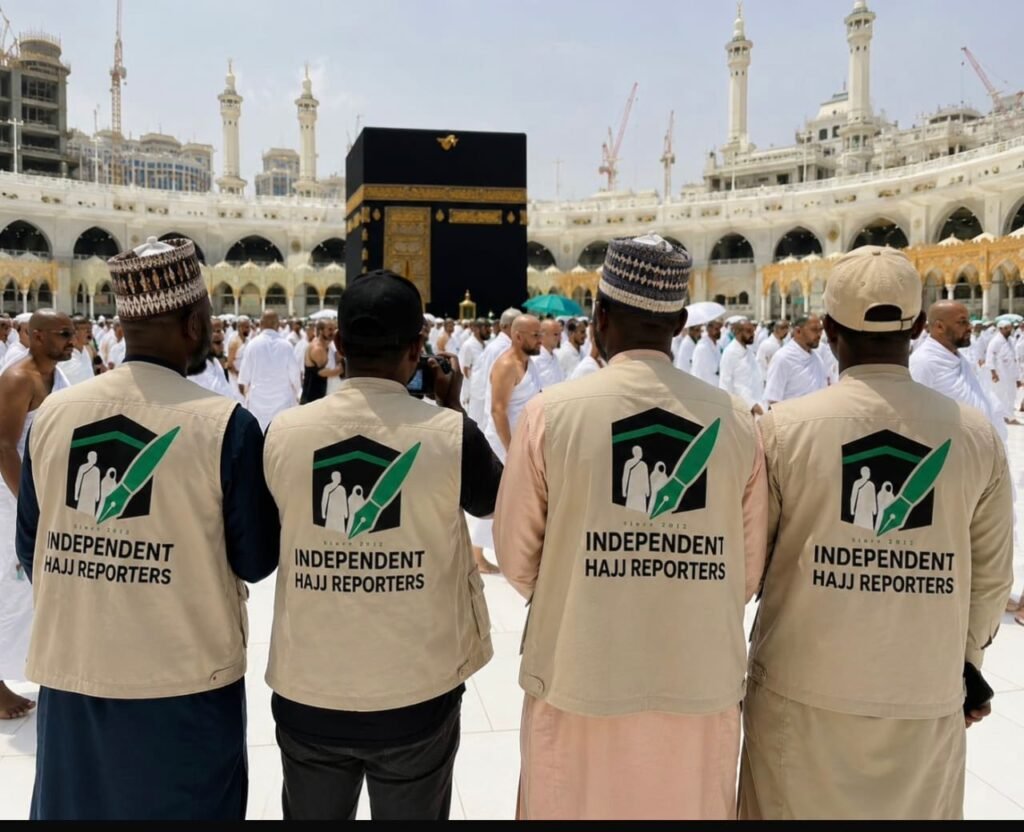
The Independent Hajj Reporters (IHR) Media Monitoring Team has highlighted significant shortcomings in some aspects of the 2026 Hajj operations in Mina and Arafat, citing disparities between pilgrims’ expectations and the services provided during the pilgrimage.
This was disclosed in a report released on Friday, signed by the Chairman of the Independent Hajj Reporters Media Monitoring Team for the 2026 Hajj, Nasiru Lawal, and released on June 5, 2026.
The monitoring team assessed key areas including feeding services, pilgrims’ welfare, official presence, religious orientation, and Hadaya (animal sacrifice) arrangements.
According to the report, meal distribution in Mina was poorly coordinated, with some pilgrims receiving food on time while others experienced considerable delays. Although the approved quantity of meals was generally maintained, the team noted that the quality of food supplied in some camps fell below acceptable standards.
The IHR consequently called for refunds to be made to pilgrims in states where meals were either not provided or where the quality of food failed to meet approved standards.
The report also raised concerns about the welfare of pilgrims and the availability of state officials. It noted that officials were insufficient in some state camps, while many were difficult to reach when assistance was needed.
According to the monitoring team, some officials were dressed in ihram rather than official uniforms, making it difficult for pilgrims to identify and approach them for support.
However, the report commended staff of the National Hajj Commission of Nigeria (NAHCON) for their dedication throughout the exercise. The team observed NAHCON personnel actively attending to pilgrims and assisting in meal distribution across the Nigerian pilgrims’ camps while wearing identifiable official uniforms.
On the conduct of pilgrims, the monitoring team recommended that NAHCON and State Muslim Pilgrims Welfare Boards introduce mandatory orientation programmes focusing on discipline, moral values, and expected religious conduct before pilgrims proceed to Mina.
The team said such lectures would strengthen adherence to the spiritual objectives of Hajj and encourage better behaviour among pilgrims.
The report also expressed concern over the lack of transparency in the conduct of Hadaya for Nigerian pilgrims. It stated that the absence of a clear regulatory framework for collecting payments and implementing the sacrifice exercise exposed pilgrims to possible exploitation.
While some states established committees to supervise the exercise and ensured its proper execution, others reportedly collected payments from pilgrims without providing verifiable evidence that the sacrifices were carried out.
The IHR therefore urged NAHCON to develop and enforce a standard framework for the collection of payments and implementation of Hadaya in future Hajj operations to enhance transparency, accountability and public confidence.