Why Chief Imam of Ibadan, Others Are Wrong on Self-Determined Ramadan Date — Concerned Yoruba Muslims
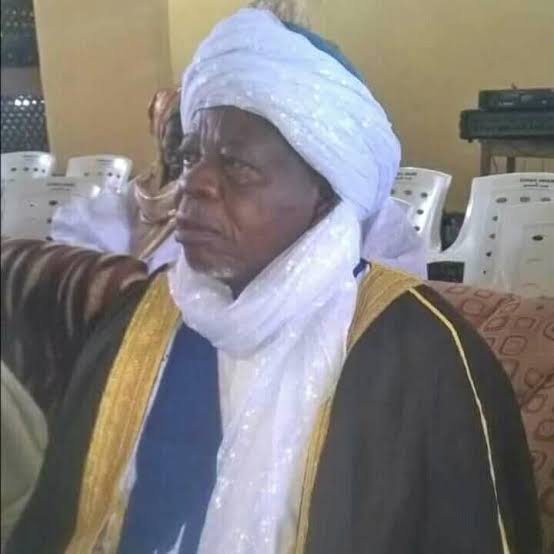
A group under the aegis of Concerned Indigenous Yoruba Muslims has faulted a viral report alleging that the Chief Imam of Ibadanland and the League of Imams in Yorubaland rejected the authority of the Muhammad Sa’ad Abubakar in determining the commencement of Ramadan in the South-West.
The report, which circulated on social media ahead of Ramadan 1447AH, claimed that the Chief Imam of Ibadan declared that Yoruba Muslims were not bound by the Sultan’s announcement on the sighting of the moon. It further alleged that religious leaders in the region had resolved to adopt indigenous structures for the declaration of fasting, distancing themselves from the traditional role of the Sultan in announcing the beginning and end of Ramadan.
But in a statement issued on Saturday, February 21, 2026 — the fourth day of Ramadan — and signed by public affairs analyst Nasrudeen Abbas on behalf of the group, the Concerned Indigenous Yoruba Muslims described the report as fabricated, misleading and aimed at creating unnecessary division within the Muslim community.
The group argued that the statement attributed to the Chief Imam of Ibadan, said to be over 90 years old, could not have emanated from him, insisting that it was a deliberate attempt to sow discord among Muslims in the country. They reaffirmed that Islam in Nigeria operates under established leadership structures, particularly the Nigerian Supreme Council for Islamic Affairs (NSCIA), which serves as the apex Islamic body in the country.
According to the group, the NSCIA is led by the Sultan of Sokoto as President-General, with the President of the Muslim Ummah of South West Nigeria (MUSWEN) serving as Deputy President-General (South), and the Shehu of Borno as Deputy President-General (North), alongside other national officers. They stressed that this structure reflects a nationally recognised framework for Muslim affairs and that no region, including Yorubaland, is exempt.
The statement also rejected claims that the Sultan’s position is merely a traditional title limited to Sokoto State, arguing that his religious authority is rooted in Islamic scholarship and the historical legacy of the caliphate. The group maintained that equating the Sultanate with purely cultural traditional rulership in the South-West was a misconception.
To reinforce its position, the group referenced the Emir of Kano, Muhammadu Sanusi II, noting that emirs in Northern Nigeria often lead congregational prayers and perform other religious duties. It contrasted this with most traditional rulers in Yorubaland, whose roles are largely cultural, though it acknowledged exceptions such as the late Awujale of Ijebuland, who once served as President-General of the Ogun State Muslim Council.
The group also cited an account involving the late Sheikh Kazeem Yayi Akorede, former President-General of the League of Imams and Alfas in the South West, Edo and Delta. According to the statement, Sheikh Akorede had initially questioned the Sultan’s religious leadership but later accepted the authority of the office in matters relating to moon sighting and Ramadan announcements after gaining clarity on the distinction between emirate leadership and traditional rulership in Yorubaland.
Describing portions of the viral report as “unethical and politically motivated,” the group condemned the alleged claim that Yoruba Muslims were not religiously bound to submit to the Sultan’s authority. It argued that such narratives were designed to promote sectarian or separatist agendas under the guise of religious autonomy, warning that they threaten the unity of the Muslim Ummah.
Quoting the Qur’anic injunction urging believers to “hold firmly to the rope of Allah and be not divided,” the group emphasised that unity remains a cardinal principle in Islam. It urged individuals and groups to desist from politicising religious matters or promoting narratives capable of undermining cohesion among Muslims across Nigeria.
The Concerned Indigenous Yoruba Muslims further called on the authors of the viral publication to retract the claims and avoid actions capable of inflaming tensions, reiterating that the unity of the Muslim Ummah in Nigeria must not be compromised by what it described as sectarian or politically engineered narratives.