
Nigeria Targets $7.7trn Global Halal Market as FG Launches National Halal Economy Strategy
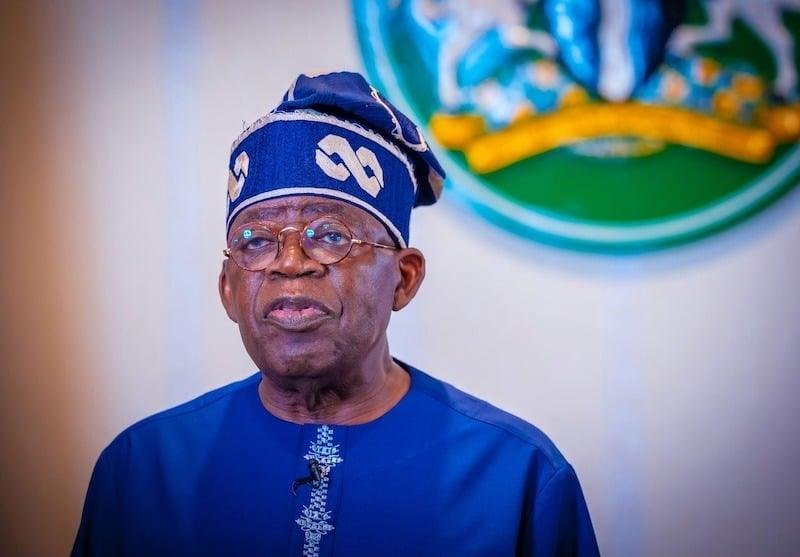
The Federal Government has unveiled Nigeria’s National Halal Economy Strategy, a policy framework designed to position the country to tap into the estimated $7.7 trillion global halal market and diversify the nation’s economy.
President Bola Ahmed Tinubu launched the strategy on Thursday at the Presidential Villa, Abuja, through his representative, Vice President Kashim Shettima. The initiative is projected to unlock over $12 billion in economic value for Nigeria and add about $1.5 billion to the nation’s Gross Domestic Product by 2027.
Speaking at the unveiling, Vice President Shettima said the launch signalled Nigeria’s readiness to take its place among countries already benefitting from the rapidly expanding global halal economy.
“It is with this sense of responsibility that I formally unveil the Nigeria National Halal Economy Strategy. This document is a declaration of our promise to meet global standards with Nigerian capacity and to convert opportunity into lasting economic value,” Shettima said.
He stressed that the success of the strategy would depend on disciplined and inclusive implementation.
“What follows must be action that is disciplined, inclusive, and measurable, so that this Strategy delivers jobs, exports, and shared prosperity across our nation,” he added.
The Vice President disclosed that the implementation structure of the strategy would be chaired by the Minister of Industry, Trade and Investment, whom he described as “supremely competent.”
Shettima outlined the core ambitions of the strategy, which include expanding halal-compliant food exports, developing pharmaceutical and cosmetic value chains, positioning Nigeria as a halal-friendly tourism destination, and mobilising ethical finance at scale by 2030.
According to him, the cumulative impact of these efforts is expected to be significant.
“These efforts are projected to unlock over twelve billion dollars in economic value, while strengthening food security, deepening industrial capacity, and creating opportunities for small-and-medium-sized enterprises across our states,” he said.
Addressing concerns linking halal strictly to religion, the Vice President noted that the global halal economy had evolved beyond faith-based interpretations.
“It is no longer defined solely by faith, but by trust, through systems that emphasise quality, traceability, safety, and ethical production. These principles resonate far beyond any single community,” Shettima stated.
He pointed out that several Western countries, including the United Kingdom, France, Germany, the Netherlands, the United States, Canada, Australia, and New Zealand, are now among leading producers and exporters of halal-certified products.
“What these nations have confirmed is a simple truth: the halal economy is a global market framework rooted in standards, safety, and consumer trust, not geography or belief,” he said.
Shettima explained that the strategy was inspired by President Tinubu’s commitment to export diversification, foreign direct investment attraction, and sustainable job creation. He added that it was developed through partnerships with the Halal Products Development Company (HPDC), a subsidiary of the Saudi Public Investment Fund, Dar Al Halal Group Nigeria, and with technical support from institutions including the Islamic Development Bank and the Arab Bank for Economic Development in Africa.
He also referenced President Tinubu’s recent state visit to Türkiye, which led to the signing of an agreement on Halal Quality Infrastructure aimed at strengthening standards, accreditation, certification, and quality assurance for Nigerian halal products.
Commenting on the launch, the Minister of Industry, Trade and Investment and Chairperson of the National Halal Strategy Committee, Dr. Jumoke Oduwole, said the strategy was the result of extensive public-private collaboration.
“What the Halal Strategy has done for Nigeria is to position us among countries that export halal-certified goods across the world,” Oduwole said.
She noted that Nigeria would leverage the African Continental Free Trade Area (AfCFTA) to expand exports of halal-certified products across Africa and beyond.
“We are going to leverage AfCFTA to ensure we export our halal-friendly goods to the rest of Africa and beyond to any willing markets; participation is voluntary,” she added.
Earlier, the Chairman and CEO of Dar Al-Halal Group Nigeria Limited, Alhaji Muhammadu Dikko Ladan, described the strategy as a landmark opportunity that would enhance market access and attract foreign direct investment.
Similarly, the French Ambassador to Nigeria, Marc Fonbaustier, represented by Carole Lebreton, Financial Counsellor at the French Embassy, said the strategy was significant for Nigeria–France relations, adding that France was ready to support Nigeria’s export drive, particularly in food, cosmetics, and pharmaceuticals.
The strategy was developed by the Halal Products Development Company of Saudi Arabia and is an outcome of a bilateral cooperation agreement signed between Nigeria and HPDC in February 2025 at the Makkah Halal Forum. It seeks to deepen Nigeria–Saudi Arabia economic ties and integrate Nigeria into global halal value chains.